


-
Hey Guest👍👎 We're looking for reviews of your local CUPRA or SEAT Dealership - it's quick and easy to do: Leave a review now
Is my tyre pressure low?
- Thread starter AnotherLife
- Start date
You are using an out of date browser. It may not display this or other websites correctly.
You should upgrade or use an alternative browser.
You should upgrade or use an alternative browser.
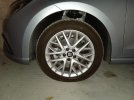


@AnotherLife; The garage tire pressure gauges attached to their air lines are often inaccurate, and I personally wouldn’t want to rely on one for checking and adjusting the pressures of my tyres.
I’d strongly recommend investing in a good tyre pressure gauge and a small 12 volt tyre compressor that plugs into the 12 volt power socket in the car. As @Mike Coulter has said, you can then check and adjust your tire pressures on a regular basis - it can form part of your other regular (monthly?) checks such as under bonnet fluid checks. My tyre pressure gauge is kept in my glove box and there’s room under the boot floor next to the spare wheel in my VW Polo to store my compressor so I’ve always got them with me.
Regular tyre maintenance - checking adjusting pressures and inspecting for unwanted embedded items and damage - only takes a few minutes and can extend the life of the tyres and help keep you safe.
I’d strongly recommend investing in a good tyre pressure gauge and a small 12 volt tyre compressor that plugs into the 12 volt power socket in the car. As @Mike Coulter has said, you can then check and adjust your tire pressures on a regular basis - it can form part of your other regular (monthly?) checks such as under bonnet fluid checks. My tyre pressure gauge is kept in my glove box and there’s room under the boot floor next to the spare wheel in my VW Polo to store my compressor so I’ve always got them with me.
Regular tyre maintenance - checking adjusting pressures and inspecting for unwanted embedded items and damage - only takes a few minutes and can extend the life of the tyres and help keep you safe.

Agree.A 2017-on car will have TPMS fitted as standard in the EU, so that should also help (assuming the initioal values were properly stored).
However, I’m of an age where I’ve owned many low tech cars in my 40+ years driving that haven’t had warning systems for such things as low tyre pressures and low under bonnet fluid levels, so carrying out these checks manually has become second nature to me. I’d rather be proactive and check / top up tyre pressures and under bonnet fluids if I see they’re lower than they should be, rather than being reactive and waiting until the car tells me something needs topping up.
The TPMS does have its limitations though as it‘ll only detect tyre pressure loss. Damage such as a sidewall bulge caused through impact damage (e.g. pothole or drain cover) won’t be detected by the TPMS if it Isn’t accompanied by a loss of pressure but it could be potentially dangerous. That’s why IMHO there’s value in doing simple manual checks on a regular basis that only take a few minutes rather than just relying on the car’s in-built monitoring systems.
Funnily enough I had a tyre sidewall failure last week (bulge as opposed to blow-out thankfully), although I have no recollection of hitting a pothole hard enough to do the damage, and it wasn't kerbing (35 profile tyres are hard to kerb withot trashing the alloy to which there are attached!). As you say the TPMS won't tell you that (and I'm still not sure how I noticed it as it was front nearside, where I never go, but fortunately I did. Equally fortuitous was the purchase of a tyre insurance policy for the first time ever, which has agreed to pay for the replacement of the 4000 mile old tyre (in 28 days of course!). Tyre pressures should be a weekly thing ideally, but as you say TPMS can make you lazy.The TPMS does have its limitations though as it‘ll only detect tyre pressure loss. Damage such as a sidewall bulge caused through impact damage (e.g. pothole or drain cover) won’t be detected by the TPMS if it Isn’t accompanied by a loss of pressure but it could be potentially dangerous. That’s why IMHO there’s value in doing simple manual checks on a regular basis that only take a few minutes rather than just relying on the car’s in-built monitoring systems.
Fitting the spacesaver (a 2 step operation as it wont fit over the Brembos) immediatley brought up the TPMS warning, due to the slightly different diameter. At least it didn't keep nagging me too much, aprat from the light on the dash.
Well, I bought one of those pencil-type pressure checkers for 3 euros ... the thing doesn't seem to work properly. One tyre showed 40, the other 3 around 20, then the original 20 this time ...
What little pieces of crap! Anyone can recommend a cheap one with a gauge? I found one for 8 euros but will it work well?
What little pieces of crap! Anyone can recommend a cheap one with a gauge? I found one for 8 euros but will it work well?

I was about to say that tyre looks like its around low 20s PSI. I bought myself (been using it over 6 years now) a digital typre pressure handheld thing. Works great! I noticed my tesco petrol stn tyre inflator thingi tends to over read by 1-1.5 PSI. So I usually over pump it by 1 or 2 psi, and release air accordingly later (much easier this way). I know it's crazy, but 4-5 years ago, it cost just 20p to add air. Then couple of years ago, it was 50p, last week it's now £1  .
.
Please note recommended tyre pressures stated in the fuel flap or drivers door area are for cold pressures. So you 'may' need to add 3-4 PSI more on fronts (if you just had a nice drive) and 2-3 PSI extra on the rears. Then probably when the sun goes down 2 hrs later after parking up, check the pressures and reduce accordingly. I'm not sure what is the stated pressures for 195/55 R16s but I'm guessing it would be low to mid 30s PSi.
You are going to laugh, but I only add air to my tyres once a year. Usually just before winter arrives I add 1-1.5 PSi over recommended, when cold it will reduce to recommended, and once the weather warms up in spring, it increases back to the recommended PSI, as it probably lost some air as well.
. Please note recommended tyre pressures stated in the fuel flap or drivers door area are for cold pressures. So you 'may' need to add 3-4 PSI more on fronts (if you just had a nice drive) and 2-3 PSI extra on the rears. Then probably when the sun goes down 2 hrs later after parking up, check the pressures and reduce accordingly. I'm not sure what is the stated pressures for 195/55 R16s but I'm guessing it would be low to mid 30s PSi.
You are going to laugh, but I only add air to my tyres once a year. Usually just before winter arrives I add 1-1.5 PSi over recommended, when cold it will reduce to recommended, and once the weather warms up in spring, it increases back to the recommended PSI, as it probably lost some air as well.
Nothing wrong with a good quality pencil gauge, for instance PCL or Schrader. Not quite so keen on digital myself because I bet the battery would be flat when I came to need it. - Known as "cordless drill syndrome" But I can't deny they are easy to use.
With the old high aspect ratio tyres (typically 80%) the sidewall was deep and would bulge voluminously when the pressure was down by enough to make any difference. Nowadays with tyres resembling thick elastic bands in some instances, it can be almost flat before you'll visually see much indication. Unfortunately I think there are far fewer people these days with much of an interest or pride in their cars or standard of driving so I think stuff like TPM systems and all the other monitoring for idiots electronics is necessary and helps to keep us safe. Personally I could do without it all. Ten minutes on a weekend morning with my dirty gardening clothes on dipping the oil, looking at the coolant and brake fluid levels and topping up the screenwash before checking tyre pressures, tread condition and sidewalls both inside and out - which is why I wear the gardening clothes, so I can get down on hands and knees to look at the inner sidewalls. I have to admit if the weather is unpleasant I don't always check the inner sidewalls though. Simple visual checks like this often allow you to notice stuff like a small bulge in a sidewall or give you time to budget for those new tyres as well as allowing you to pick up on stuff like small coolant hose leaks and maybe a brake flex hose damaged, rusty brake pipe or loose undertray. It's amazing what turns up when you do regular checks and it can save you shed loads of cash if you notice, say, a coolant hose weeping before it actually starts leaking seriously.
Maybe though you're like my Mrs, who has no idea where the bonnet catch is or how to open it. As she says though "why would I keep a dog and bark myself"? I'm still trying to figure out if that's complimentary or not?
With the old high aspect ratio tyres (typically 80%) the sidewall was deep and would bulge voluminously when the pressure was down by enough to make any difference. Nowadays with tyres resembling thick elastic bands in some instances, it can be almost flat before you'll visually see much indication. Unfortunately I think there are far fewer people these days with much of an interest or pride in their cars or standard of driving so I think stuff like TPM systems and all the other monitoring for idiots electronics is necessary and helps to keep us safe. Personally I could do without it all. Ten minutes on a weekend morning with my dirty gardening clothes on dipping the oil, looking at the coolant and brake fluid levels and topping up the screenwash before checking tyre pressures, tread condition and sidewalls both inside and out - which is why I wear the gardening clothes, so I can get down on hands and knees to look at the inner sidewalls. I have to admit if the weather is unpleasant I don't always check the inner sidewalls though. Simple visual checks like this often allow you to notice stuff like a small bulge in a sidewall or give you time to budget for those new tyres as well as allowing you to pick up on stuff like small coolant hose leaks and maybe a brake flex hose damaged, rusty brake pipe or loose undertray. It's amazing what turns up when you do regular checks and it can save you shed loads of cash if you notice, say, a coolant hose weeping before it actually starts leaking seriously.
Maybe though you're like my Mrs, who has no idea where the bonnet catch is or how to open it. As she says though "why would I keep a dog and bark myself"? I'm still trying to figure out if that's complimentary or not?
@Crossthreaded; maybe I shouldn’t be surprised, but I‘ve read posts on other forums where owners have had a low fluid level (oil, coolant, screen wash) warning light illuminate on their instrument display, which does suggest that they may not have manually checked their under bonnet fluid levels recently - if at all - otherwise the could have taken the necessary action and topped up, rather than wait until a warning light comes on.
I read a post on a VW forum earlier this week In relation to the mk8 Golf not having a gas bonnet strut, and having to make do with a manual bonnet prop. One forum member who posted said the lack of a gas bonnet strut didn’t bother them as they hadn’t opened their car’s bonnet in five months! Mine car’s bonnet gets opened every time I wash the car which is every couple of weeks or so, and I take that opportunity to check the under bonnet fluid levels - and check the tyres - at the same time.
Agree, spending those few minutes checking tyres and fluid levels could save owners £££‘s, as potential problems could be spotted early.
I read a post on a VW forum earlier this week In relation to the mk8 Golf not having a gas bonnet strut, and having to make do with a manual bonnet prop. One forum member who posted said the lack of a gas bonnet strut didn’t bother them as they hadn’t opened their car’s bonnet in five months! Mine car’s bonnet gets opened every time I wash the car which is every couple of weeks or so, and I take that opportunity to check the under bonnet fluid levels - and check the tyres - at the same time.
Agree, spending those few minutes checking tyres and fluid levels could save owners £££‘s, as potential problems could be spotted early.
Last edited:
Turns out the pencil type pressure checker wasn't that far off, I went to a gas station and had them pumped, they were all in the low 20s, oops! But why did the checker pop a 40 reading initially? It made me doubt all the rest of the measurements.
Shitty TPMS just measures differences between them so I got no warning.
Anyway, I pumped them to 33 at the front and 31 at the back. Reminder, they are 195/55 R16. Thoughts? It's free to pump them in my country, most gas stations have pumps.
Shitty TPMS just measures differences between them so I got no warning.
Anyway, I pumped them to 33 at the front and 31 at the back. Reminder, they are 195/55 R16. Thoughts? It's free to pump them in my country, most gas stations have pumps.
The TPMS on your car is an indirect system that monitors the rotational speed of the wheels via the ABS sensors. It‘s purpose is to warn of a sudden loss of pressure in (usually) just one tyre - e.g. where the tyre has become damaged / punctured. If this happens, then the wheel with the damaged tyre will rotate at a different speed to the other wheels, and a low pressure warning will be triggered. If all tyres have lost equal pressure, then all wheels will still be rotating at the same speed so a low pressure warning won’t be triggered by the TPMS. That‘s why IMHO it’s important to check your tyre pressures manually on a regular basis - and carry out other checks at the same time, such as the general condition of the tyres and your under bonnet fluid levels (oil, coolant, screen wash). That way you can spot any problems and deal with them there and then or at the earliest opportunity.Turns out the pencil type pressure checker wasn't that far off, I went to a gas station and had them pumped, they were all in the low 20s, oops! But why did the checker pop a 40 reading initially? It made me doubt all the rest of the measurements.
Shitty TPMS just measures differences between them so I got no warning.
Anyway, I pumped them to 33 at the front and 31 at the back. Reminder, they are 195/55 R16. Thoughts? It's free to pump them in my country, most gas stations have pumps.
Setting tyre pressures shouldn’t really be guesswork as there’ll be a recommended tyre pressure for 195/55 R16 tyres on your model of Ibiza. My VW has a sticker on the lower section of driver’s side B pillar which provides details of recommended tyre pressures - the owners manual for your car shows that the Ibiza’s tyre pressure sticker should be in the same location;
There may also be a ‘comfort’ tyre pressure setting for your car if you find the recommended pressure gives a ride quality that is a little too firm, although if you’d been running pressures of low 20’s for some time, then even the comfort setting may initially give the impression of quite a firm ride.
Bearing in mind you’ve been running your car with a very low tyre pressures, I would recommend you also check the tyre tread depth at different points across the width of each tyre. The tread depth should be pretty much the same across the entire width of the tyre, but with excessively under inflated tyres, they may have worn unevenly (worn more on the outer tread sections than the middle tread section), especially if your tyre pressures have been at low 20’s psi for some time.
Last edited:
I am attaching a photo of my sticker, that's where I got the 33/31 psi from, the comfort values. But is it for my tyre dimensions?
And what is that crazy tyre dimension at the bottom? The dimensions of the spare wheel? I just checked my spare wheel, it is a Michelin 185/65 R15.
And what is that crazy tyre dimension at the bottom? The dimensions of the spare wheel? I just checked my spare wheel, it is a Michelin 185/65 R15.
Attachments
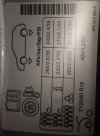

Those pressures should be for your tyre size - there’ll be other versions of the sticker used by Seat on the factory production line for other wheel / tyre sizes and the production assembly workers will attach the correct sticker to each car depending on the wheel / tyre size fitted.I am attaching a photo of my sticker, that's where I got the 33/31 psi from, the comfort values. But is it for my tyre dimensions?
And what is that crazy tyre dimension at the bottom? The dimensions of the spare wheel? I just checked my spare wheel, it is a Michelin 185/65 R15.
The tyre dimension at the bottom of the sticker is for one of the skinny space saver spare wheel/tyres.
Turns out the pencil type pressure checker wasn't that far off, I went to a gas station and had them pumped, they were all in the low 20s, oops! But why did the checker pop a 40 reading initially? It made me doubt all the rest of the measurements.
How long have you not checked your pressures? From what I saw and from experience (nail in tyre, and TPMS pings), my 205/55 R16 on a Leon looked just like that, a little buldgy! And it was low 20s PSI. Even after a year, it would not drop 10 PSI if you have a newish car and newish valves.
It means “RTFM” ?. Or rather, read the handbook, where it talks about “comfort pressures”. Use those for a more compliant but less fuel efficient ride.
It means that there should be additional supplementary information in the owner’s manual.What does the i symbol mean on the sticker?
Similar threads

- Replies
- 6
- Views
- 1K


