• Hey Guest💡👉 We have just launched our new Dealer Directory and review service Find out more now
P1040503.jpg


P1040504.jpg


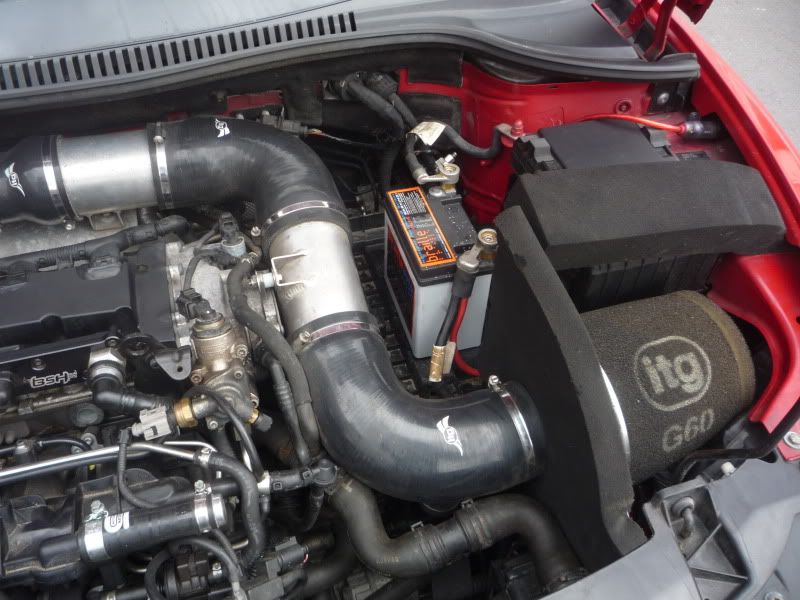
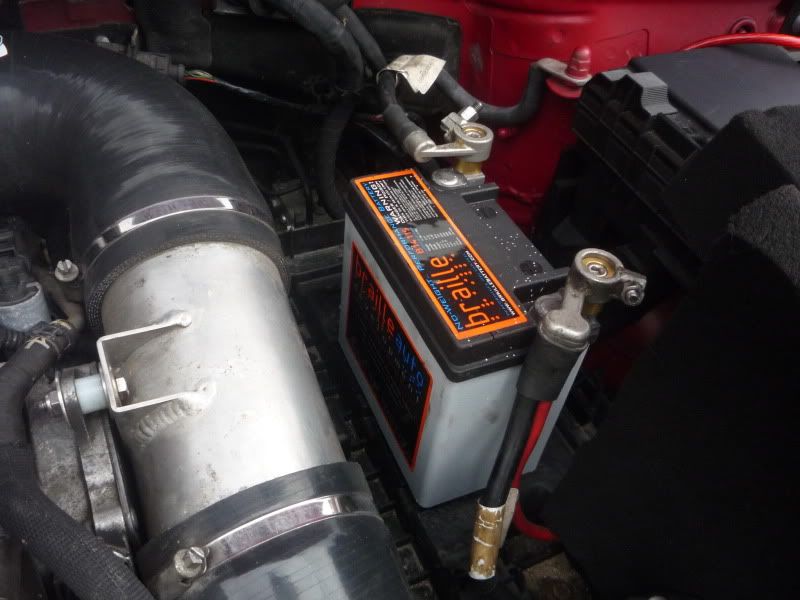
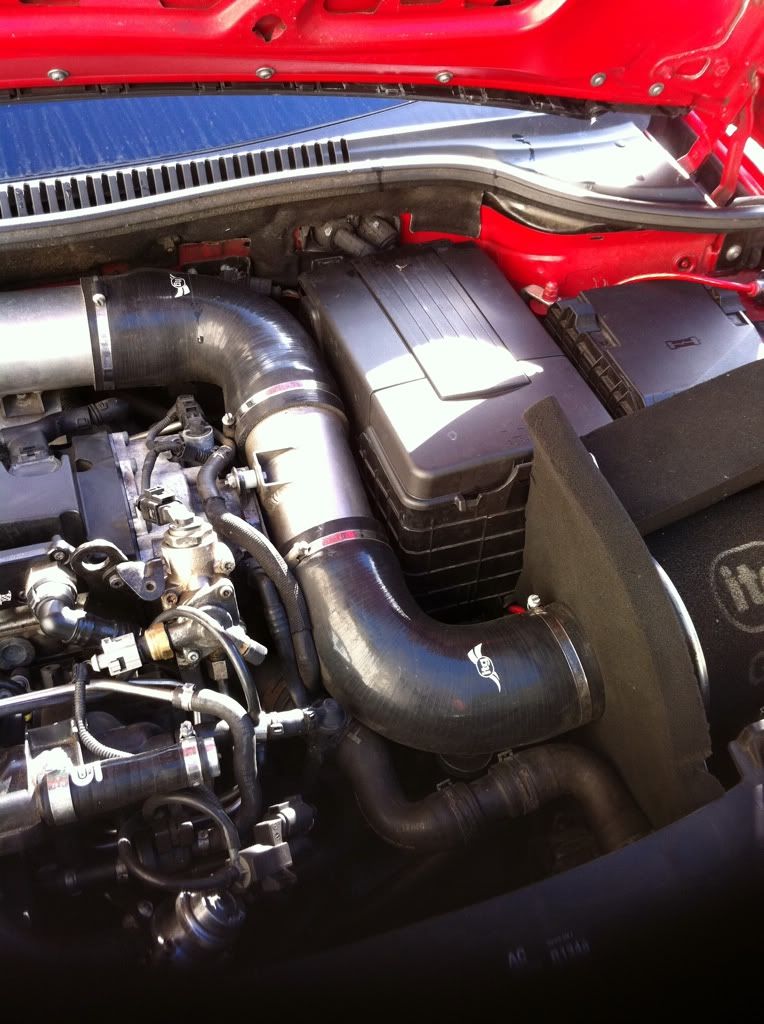
Fitted OEM battery box

7ae70090.jpg
 
1. The lightweight battery mostly makes sense in a Leon Mk 1. Due to the battery hanging outside the wheelbase at the extreme front end of the car, differences of 10-20lbs due to battery weight change the car's polar moment of inertia and they may improve handling or make it worse.

On a Leon Mk 2 or Mk 3, which has the battery behind the front axle and inside the wheelbase, the reduction in battery weight is just that, lightening the overall weight of the car.

2. Lightweight batteries generally have poor CCA (Cold Cranking Amps) rating and they may die after some time with car sitting.

3. Generally 2 A / cubic inch may be enough to start a petrol engine in winter, therefore Braille / Deka ETX-14 batteries have around 220 CCA, enough for a 1.8T / 2.0TFSI.

4. However, exotic lightweight batteries which provide the same reliability as an acid battery are not much lighter:

Odyssey PC925 has 28Ah, 380CCA, and weighs 25lbs.

Varta B36 has the same mounting points as stock battery, 44Ah, 420CCA and it's lighter than Odyssey, at 22.5lbs.

So it makes sense to have either a very light battery for a car driven daily and tracked often, where every grain matters (Deka ETX-14, 12 Ah, 220 CCA, 12lbs) or a relatively lighter than stock, but not tiny battery for a reliable car (Varta B36, 44Ah, 420CCA, 22.5 lbs, or Varta A16, 40Ah, 360CCA, 21-22lbs).

Stock 1.8T 60Ah battery has 33lbs (Varta) to 38lbs (Banner).
 
Last edited:
Example:

By changing in a Leon Mk1 (with FSD shock absorbers, Bonrath high durometer top mounts, Wiechers upper and lower braces, -1.0 deg front camber etc) a Varta D24 battery (14.89 to 15.00 kg) to a Varta B36 battery (10.00 to 10.18 kg), some effects could be felt despite minor weight loss:

- Less jump of the left front wheel on bumps (which is counterintuitive, when you lighten an object you expect it to jump more, not less);
- A little bit easier steering in hairpin turns.

Both effects are very minor, but they can be felt.

This also means adding weight at the extreme front of the car in form of big FMICs may not be the wisest move for handling. (12 liter FMIC = 3.0 to 3.5 kg, little weight, but in the wrong place, outside the wheelbase. Just like in a stock Leon someone would zip-tie a 3 kg boulder on the license plate :p )

Starting in 0°C to 5°C (32-41°F) weather is just as before, quick and easy.
 
Exotic batteries as the LiFePO4 battery can provide similar performance to the stock lead-acid 60Ah/480CCA battery, with far less weight.

For example, a 50Ah LiFePO4 battery (this type does not degrade by deep discharge as acid does, so it needs little current reserve compared to acid, 50Ah in lithium is just as good as 60Ah in acid) has only 6.5kg / 14.3lbs, almost 20lbs saved compared to a Banner acid battery.

Their fault is cost, nearly $500 for lithium compared to less than $100 for acid.
 
So it's the same weight as a lightweight race battery at 5 times the cost, the only benefit i can see of these is they don't require looking after.
 
And they can give the same power reserve as a classic acid battery, unlike ultralight racing batteries can do.

Porsche Racing Battery is less than 13 lbs, but it sells for $1700...

Lightweight-Battery-Option.jpg
 
There are 2 types of starter motor on an 1.8T:

Pre-2001 (or, more accurately, to VIN no. ending in ...020000):

Part no. 02M 911 023 A / 02M 911 023 C / 02M 911 023 F
Long - motor is longer than starter solenoid.
Rated at 2 kW.

Post-2001 (car made after July 2001, or after VIN no. ...020001):

Part no. 02A 911 023 L / 2A9 110 23L
Short - motor has same length as starter solenoid.
Rated at 1.1 kW.

So a post-2001 car needs 1100 watts at the flywheel to start.

Starter motors as any brushed single-speed electric motor are only about 60% efficient. Which means a 1.1 kilowatt motor needs to draw over 1800 watts to turn the engine, which translate into a bit over 140 A at 12.6 volts.

Which means any battery able to give 150 CCAs can be used in a Leon in cold season, as long as the car is in perfect state and can start at the first turn of the starter motor. Even 150-200 CCA motorcycle batteries, which are about 7 lbs in weight. People living in warmer climates should make even better.
 
I've been using a LiFePo4 battery in my A3 2.0TFSI(sorry...) for quit a while now... Only weighs 1.7kg, has 450CCA and cranks the car every time(no matter how cold).
However: as being a LiFePo4 battery, it does require the occasional recharge(with a specific Lithium charger, for around 50quid) to get the internal battery management alligned again(otherwise you'll loose performance, as in CCA)
 
Found out the experiment here: 12V BoostPack Starts Freezing Cold Engine – Capacitors Replacing Car Batteries

A hybrid battery made from 6 x 350F supercapacitors and a Li-po battery from a RC car could give a start even in freezing cold, while being no more than 1 kg in weight.

Tried to make myself a similar pack, but with stronger supercapacitors and a sizable lead-acid battery to have more reserve.

Used 6 x 700F Nippon DLCAP capacitors in series, for a maximum of 15 volts, and a 10 Ah AGM battery for current reserve, all fitted together in a wooden box I did myself.

Goal: to get similar performance to a 60Ah lead-acid battery, in a package about 5 kgs in weight. This equals removal of 10 kgs from the extreme front end of the car, which helps to limit understeer.

20161224_122857.jpg


Each supercap got a balacing circuit from CSDWell fitted in parallel to limit voltage.

Total weight fully assembled 5.7 kg, out of which 3.38 kg AGM battery, 1 kg wooden box + cables.

The system fits invisibly inside of the Leon Mk1 battery box.

Results: starts much quicker at 0°C compared to lead-acid battery, voltage with engine running is stable at 14.4 volts engine warm, 14.6 volts engine cold, idle a bit smoother. Rpms climb a little bit faster, as the alternator hardly does any effort after the first few seconds needed to recharge the capacitors.
 
Last edited: